


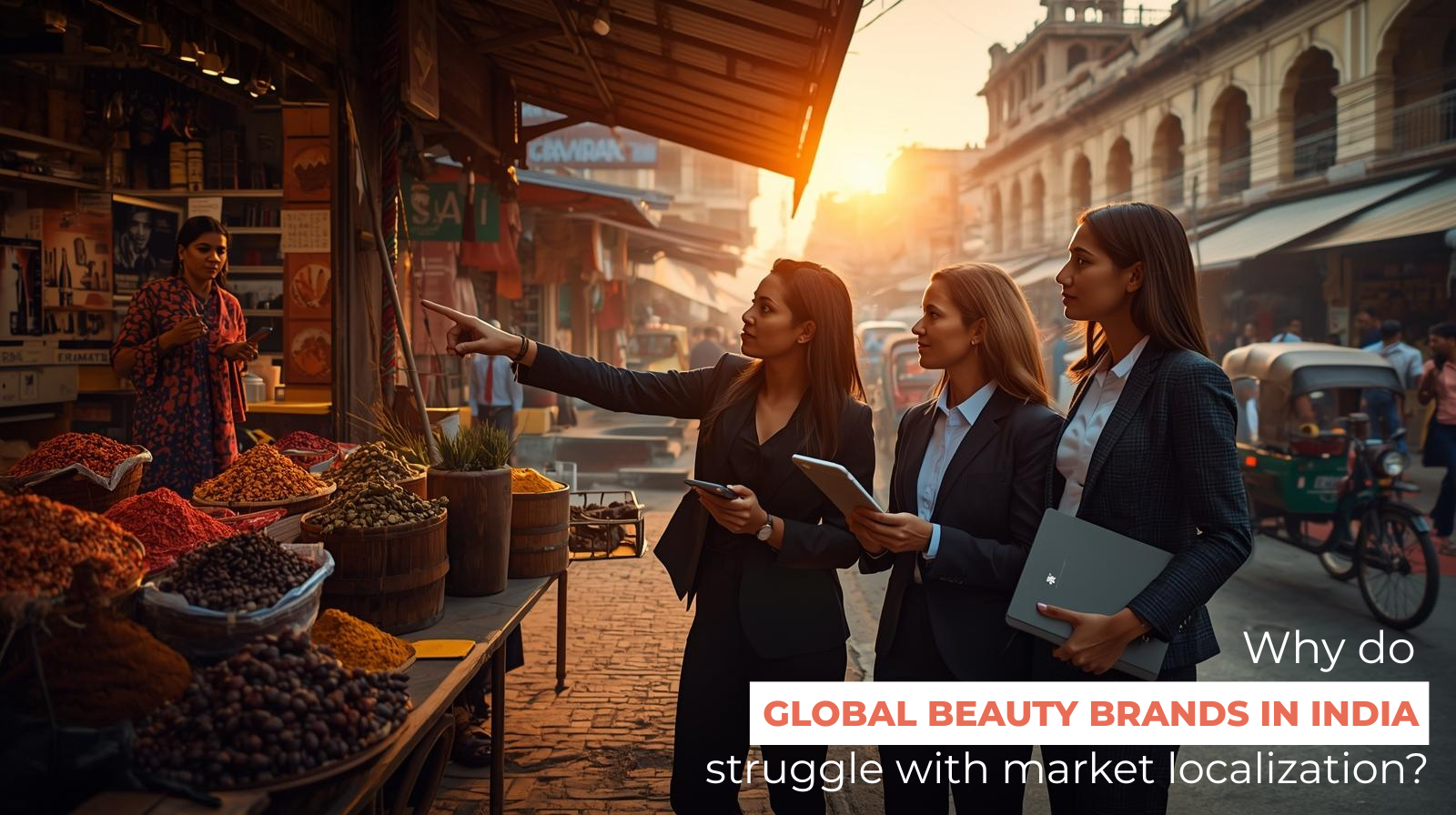
Why do global beauty brands in India struggle with market localization?
Global beauty brands in India
The Indian beauty and personal care market is currently one of the most dynamic and fastest-growing landscapes in the world. However, for many international giants, entering this space is not a guaranteed success. Despite significant investments, several global beauty brands in India find themselves struggling to bridge the gap between their international prestige and the local consumer’s needs.
The challenge isn’t just about making products available; it’s about understanding the deep-seated cultural nuances, diverse skin tones, and the unique climatic conditions of the subcontinent. When a global beauty brand agency in India analyzes these market entries, the recurring theme is often a lack of "Indianization." This blog explores why these hurdles exist and how brands can navigate the complex Indian consumer psyche.
The Complexity of the Indian Consumer Identity
India is not a monolithic market. It is a continent-sized country with varying weather patterns, dietary habits, and beauty standards. A product that works in the dry heat of Rajasthan might fail in the humid coastal air of Mumbai.
1. The Diversity of Skin Tones and Textures
Many global beauty brands in India initially launched with shade ranges designed for Caucasian or East Asian skin tones. This "copy-paste" strategy led to immediate alienation. Indian skin often has olive, yellow, or golden undertones, which require specific pigment formulations. Without a deep dive into local R&D, international products often look ashy or grey on the Indian complexion.
2. Traditional vs. Modern Expectations
Indian consumers have a long-standing relationship with "Ayurveda" and natural home remedies (Dadi Maa ke Nuske). When beauty brands in India ignore these traditional roots, they lose out on a layer of trust. The struggle for global players lies in balancing their high-tech chemical formulations with the "clean" and "natural" labels that Indian shoppers instinctively prefer.
Strategic Gaps in Regional Positioning
Success in the Indian market often depends on where you plant your roots. For instance, global beauty brands in Mumbai face a different set of logistical and marketing challenges compared to those in Delhi or Bangalore.
- The Mumbai Pulse: In the financial capital, speed and glamour are paramount. Any global beauty brand agency in Mumbai will tell you that the humid climate dictates a need for long-wear, sweat-proof products. Brands that fail to adapt their formulas to these conditions often see high return rates or poor reviews.
- The Digital Divide: While urban centers are saturated, the real growth lies in Tier 2 and Tier 3 cities. Many global brands struggle to communicate their value proposition to a non-English speaking audience, creating a barrier to entry.
To truly resonate, brands must leverage professional expertise in corporate communications to ensure their messaging is culturally sensitive and regionally relevant.
The Pricing and Value Perception Battle
The Indian consumer is famously value-conscious. This does not mean they only want "cheap" products; rather, they want "paisa vasool" (value for money).
- The Sachet Revolution: Many global brands are hesitant to move away from their luxury glass packaging. However, the Indian market has been built on the accessibility of small-format packaging.
- The Luxury Perception: Sometimes, global beauty brands in India price themselves so high that they become "aspirational" but never "attainable." This leads to a low repurchase rate, which is the death knell for any beauty brand.
- Tiered Pricing: Successful brands often create a "masstige" (mass-prestige) category, offering the luxury of the global name at a price point that fits the middle-class budget.
Marketing and Communication Hurdles
If the story isn't told right, the product won't sell. This is where many international companies stumble. They rely on global ambassadors who may not resonate with the local girl-next-door.
- Public Relations Overload: Without a localized public relations strategy, global launches can feel cold and corporate. Indian consumers crave storytelling that involves local influencers, celebrities, and real-life testimonials.
- The Power of Digital: Social media in India is a beast of its own. A specialized digital marketing approach is required to navigate the nuances of Indian Instagram, YouTube, and the burgeoning "Quick-Commerce" (Blinkit/Zepto) culture.
- Agency Partnerships: Working with a dedicated global beauty brand agency in Mumbai or across India helps these corporations understand that "influence" in India is often community-driven and family-oriented.
Why Legacy Matters in the Indian Context
In the beauty world, trust is the most valuable currency. Some brands have managed to stick around for decades by evolving with the Indian woman. Understanding how legacy global beauty brands in India stay trusted across generations provides a blueprint for newer entrants. It’s about building a relationship that survives the trend cycles.
On the flip side, we are seeing a shift where how Indian beauty companies can become legacy global beauty brands in India is becoming the new narrative. Local "D2C" brands are now giving international giants a run for their money because they understand the "Indian pulse" from day one.
The Role of Supply Chain and Distribution
Localization isn't just about the product; it's about how the product reaches the shelf.
- The Kirana Shop vs. The Mall: While global brands prefer high-end malls, a huge chunk of Indian beauty sales happens in local multi-brand outlets. Navigating this unorganized retail sector is a logistical nightmare for many foreign companies.
- Temperature-Controlled Logistics: India's heat can degrade premium cosmetic formulations. Brands that do not invest in localized manufacturing or high-end supply chain solutions often find their products separating or spoiling before they reach the consumer.
Five Key Takeaways for Market Success
To avoid the common pitfalls of market entry, global beauty brands in India should focus on:
- Product Reformulation: Don't just ship the same cream from Paris to Mumbai. Test it for the Indian climate.
- Inclusive Marketing: Ensure the global beauty brand agency in India you partner with understands the nuances of local festivals, languages, and traditions.
- Pricing Sensitivity: Introduce entry-level products to let consumers "sample" the brand before committing to high-ticket items.
- Omnichannel Presence: You need to be as visible on a local beauty app as you are in a luxury mall.
- Authentic Storytelling: Move away from "Global Gloss" and move toward "Local Love."
Conclusion: The Path Forward
The Indian beauty market is not a puzzle that can be solved overnight. It requires patience, empathy, and a willingness to learn from the local experts. Whether you are looking at the performance of global beauty brands in Mumbai or analyzing the reach of beauty brands in India as a whole, the conclusion is clear: Localization is the only way to survive.
By partnering with the right experts in digital marketing and communications, brands can turn their struggle into a success story. At Tandem Communication, we understand the delicate balance between maintaining a global identity and achieving local relevance. The brands that win in India are the ones that stop acting like visitors and start acting like neighbors.
The future of beauty is global, but the heart of the business will always be local. Success for any global beauty brand agency in Mumbai or beyond lies in the ability to listen to the Indian consumer's voice a voice that is loud, diverse, and ready for brands that truly "get" them.