


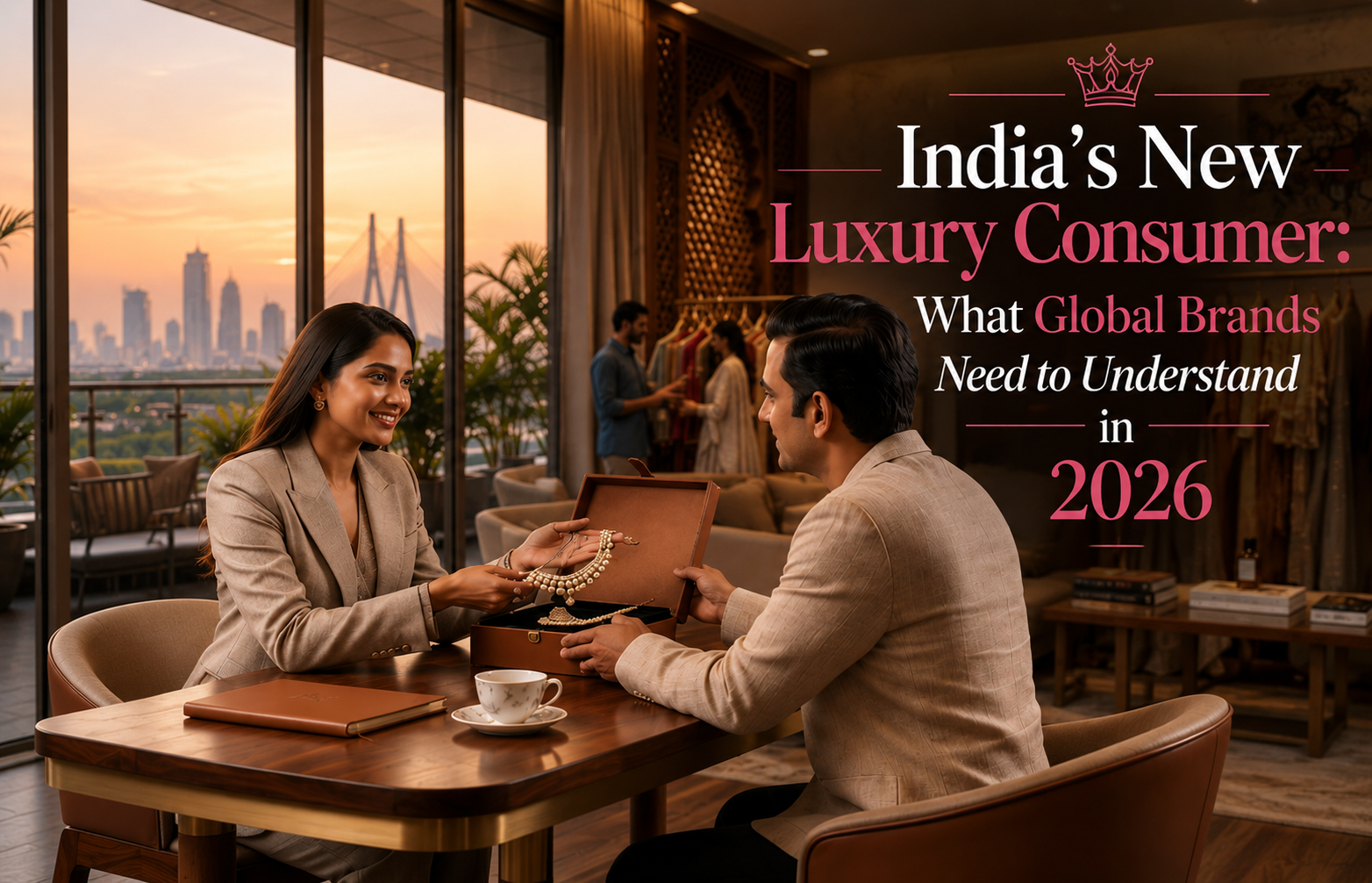
India's New Luxury Consumer: What Global Brands Need to Understand in 2026
India is no longer the luxury market of tomorrow. It has become one of the industry's most strategically important growth markets.
While global luxury spending has softened in several mature markets, India continues to stand out, fuelled by rapid wealth creation, a young affluent population and rising confidence in premium consumption. But what makes India exciting isn't simply the pace of growth—it's that the definition of luxury itself is changing.
Today's affluent Indian consumer isn't buying luxury to signal status. They're buying it to express identity.
For international brands, that shift demands a new playbook.
Wealth Has a New Face
Luxury in India was once driven largely by established business families and inherited wealth. That audience remains influential, but it's now joined by a new generation of wealth creators—founders, technology entrepreneurs, investment professionals, global executives and second-generation family business leaders.
This cohort is younger, internationally exposed and digitally fluent. They have travelled widely, understand global luxury codes and are as comfortable shopping in Milan or Tokyo as they are in Mumbai. Yet they're increasingly looking for brands that recognise India's cultural confidence rather than treating it as simply another emerging market.
The opportunity today isn't just selling luxury in India—it's becoming culturally relevant within India.
Luxury Is Becoming More Personal
For years, visibility defined aspiration. Today, discretion often carries greater value.
Indian consumers are increasingly gravitating towards craftsmanship, rarity and personalisation over overt branding. Bespoke services, made-to-order collections, private appointments and limited-edition collaborations are becoming stronger expressions of luxury than logo-led products.
The purchase is no longer the end of the relationship; it's the beginning of one.
Brands that invest in long-term client relationships, exceptional service and meaningful experiences are building significantly stronger loyalty than those relying purely on product launches.
Global Heritage Needs Local Relevance
One of the biggest shifts shaping the Indian market is the growing importance of cultural context.
Consumers aren't looking for international brands to become Indian. They expect them to understand India.
Whether through collaborations with artists and designers, thoughtful engagement with Indian craftsmanship, or experiences rooted in local culture, brands that acknowledge India's creative identity are creating far deeper emotional resonance than those that simply localise global campaigns.
The strongest luxury brands maintain their global heritage while demonstrating genuine cultural intelligence.
Experience Is the New Luxury Currency
Physical retail remains essential, but stores are increasingly becoming destinations rather than transaction points.
Private salons, invitation-only previews, intimate dinners, collector events and immersive brand experiences are replacing traditional launch events. Consumers are looking for access, conversation and community as much as they are looking for products.
Digital channels continue to play a critical role throughout the discovery journey, but the highest-value purchases are still often built through personal relationships and exceptional offline experiences.
Luxury today is less about where you buy and more about how the brand makes you feel.
Communication Must Feel Curated
As luxury consumers become more discerning, traditional communication approaches are becoming less effective.
Prestige today is built through carefully curated storytelling rather than constant visibility.
Thought leadership, editorial credibility, founder narratives, cultural partnerships and meaningful conversations often generate greater long-term value than high-frequency product announcements. Increasingly, the brands earning attention are those contributing to broader conversations around design, craftsmanship, sustainability and culture—not simply promoting collections.
In India, relevance is becoming as valuable as reach.
One Market, Many Luxury Audiences
Although Mumbai and Delhi remain India's most influential luxury centres, affluent consumers are becoming increasingly diverse.
Mumbai continues to reflect the country's entrepreneurial and financial economy, while Delhi combines heritage wealth with political and business influence. Bengaluru's technology ecosystem is producing an entirely new generation of global luxury consumers, and cities such as Hyderabad, Ahmedabad and Pune are contributing meaningfully to premium consumption.
Rather than viewing India as a single luxury market, brands should recognise it as a collection of distinct consumer communities, each with its own motivations and cultural nuances.
What This Means for Luxury Brands
The brands likely to lead in India over the next decade will be those that move beyond transactional marketing.
- They will invest in relationships rather than campaigns.
- They will create cultural relevance rather than simply localise communication.
- They will build communities instead of audiences.
And they will understand that, in India, luxury is increasingly measured not only by craftsmanship or heritage, but by authenticity, cultural intelligence and emotional connection.
The Road Ahead
India's luxury market is entering a new phase one defined not just by rising wealth, but by evolving expectations.
Consumers are more informed, more globally connected and more selective than ever before. They expect exceptional products, but they also expect brands to understand the world they live in.
For international luxury houses, success in India will depend less on replicating global strategies and more on building lasting cultural relevance. Those that invest in understanding India's unique blend of ambition, heritage and creativity will be best placed to earn not just market share, but enduring loyalt.
Tandem Communication
Email: tandem.comm@tandemcommunication.net
Instagram | Linkedin | Facebook